Daisy 2% vs 4% cottage cheese: tubs and single portions
Both U.S. tubs list 13 g protein per 113 g; the fat levels and 150 g single-container servings need separate comparisons.
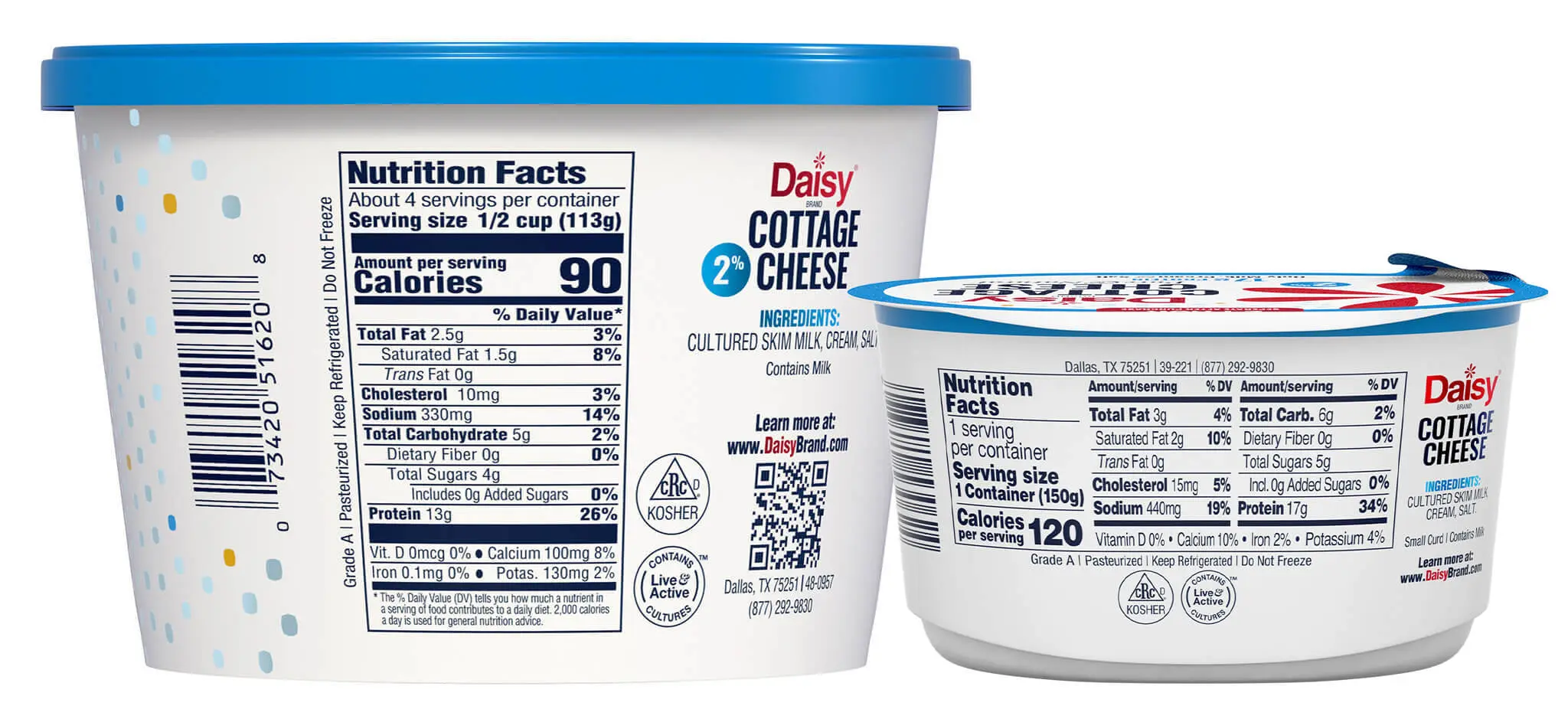
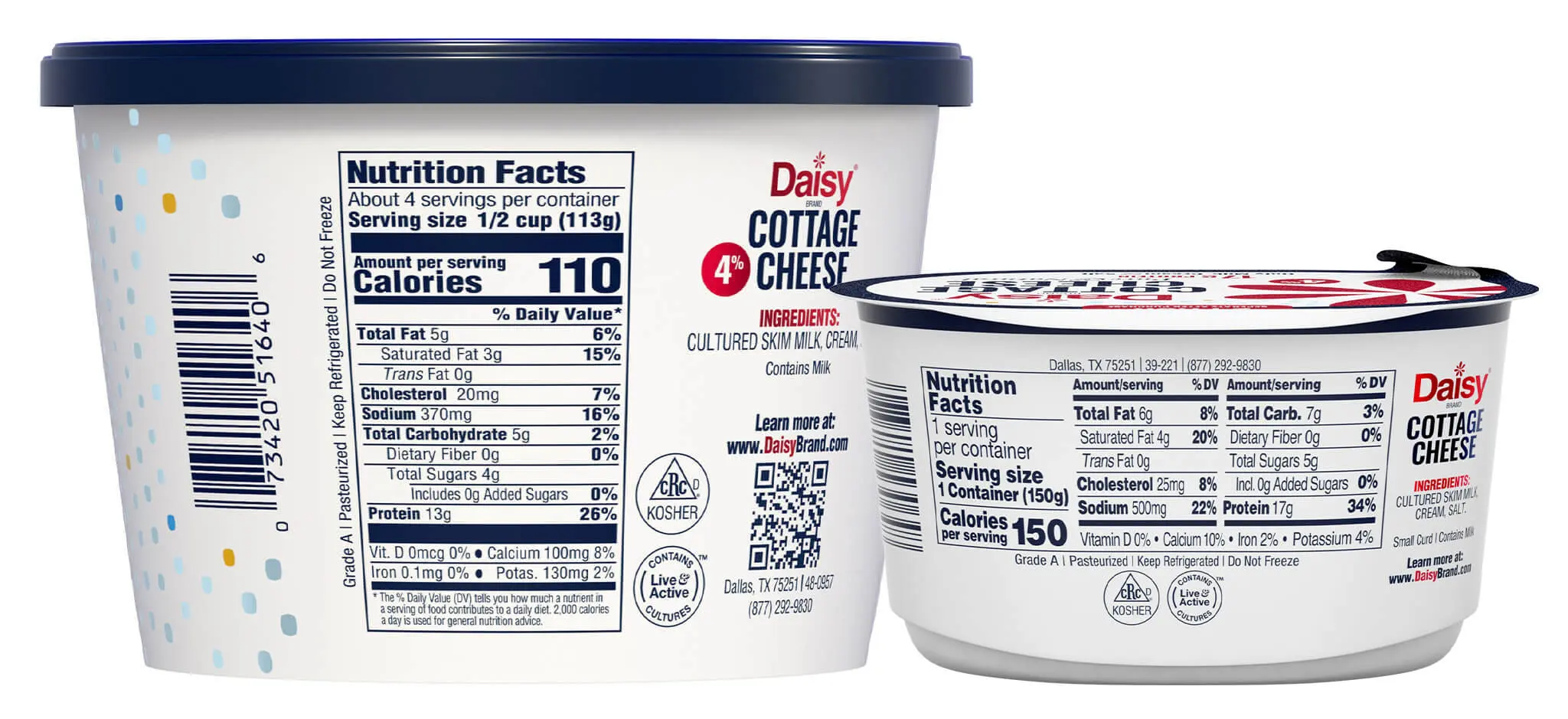
Daisy’s U.S. 2% and 4% cottage-cheese tubs both list 13 g protein per 113 g. The 2% tub lists 90 kcal and 2.5 g fat; the 4% tub lists 110 kcal and 5 g fat. A 150 g single-serve container is a larger portion, with a separate panel.
Two fat levels, two package formats
The manufacturer supplies back-of-pack images for both products. The tub serving is half a cup, 113 g. The individual container is 150 g. Read across one row before comparing: the front percentage alone does not tell you which serving was used.
| Product and portion | kcal | Protein (g) | Carbs (g) | Fat (g) | Sodium (mg) |
|---|---|---|---|---|---|
| 2% tub · 113 g | 90 | 13 | 5 | 2.5 | 330 |
| 4% tub · 113 g | 110 | 13 | 5 | 5 | 370 |
| 2% single container · 150 g | 120 | 17 | 6 | 3 | 440 |
| 4% single container · 150 g | 150 | 17 | 7 | 6 | 500 |
Lower fat does not mean more protein here
At the fixed 113 g tub serving, switching from 4% to 2% changes the listed total by 20 kcal and 2.5 g fat. Protein stays at 13 g. The lower-fat tub also lists 40 mg less sodium. Those are separate label comparisons; the percentage on the lid is the milk-fat level, not the fraction of your daily fat allowance.
There is another choice in the same portion: saturated fat is 1.5 g in the 2% tub and 3 g in the 4% tub. Neither this difference nor the calorie total makes either food a complete description of a meal. Toast, crackers, fruit and other additions still have their own portions.
Why does the small container show more?
A 150 g container holds about 33% more food than the 113 g label serving. Its higher protein total is therefore not evidence that it is a special high-protein version. Compare the two 150 g containers with each other, or normalize both foods to the amount you intend to eat.
Use the actual container’s label when available. Multiplying the tub’s rounded values by 150 ÷ 113 produces a useful estimate, but it need not reproduce every rounded value on a separately declared 150 g package. Do not “correct” a manufacturer’s package panel solely because the arithmetic differs slightly.
Log a snack without guessing its size
- Choose plain Daisy cottage cheese with the correct fat percentage and market.
- For a tub, weigh the amount you spoon out or use its supported half-cup serving. For an individual pot, choose that package’s full-container portion.
- Add fruit, preserves, seeds or crackers separately. The plain-cottage-cheese panel does not include them.
The source images also show that both products contain milk. Ingredient and allergen decisions require the current package; a protein comparison is not an allergy check. This guide compares nutrition and serving formats, not flavor, retail availability or personal digestive tolerance.
Sources & serving notes
- Daisy · cottage-cheese products and label links
Official product panel read on the research date. Check your own package for the current formulation.
- Daisy · 2% back-of-pack image
Official packaging image downloaded and visually read; retained as private source evidence, not reused publicly.
- Daisy · 4% back-of-pack image
Official packaging image downloaded and visually read; retained as private source evidence, not reused publicly.
- Daisy · what 2% and 4% mean
Official product panel read on the research date. Check your own package for the current formulation.
- FDA · serving size is not a recommended portion
Official product panel read on the research date. Check your own package for the current formulation.
Sources checked 2026-10-19. U.S. plain products only; no fruit-compote product is included. Packaging can change.